A machine for living in
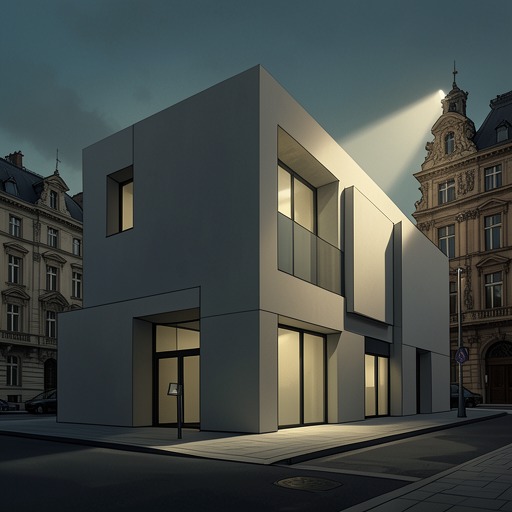
The Glass Room“A machine for living in” is the modernist formulation that Rainer von Abt gives to the Landauer House, naming its ambition to be more than a conventional shelter. Across the novel, the phrase resonates against the house’s changing uses: its construction as a light-filled modern home, its conversion into an instrument of racial measurement, and its later life as a children’s gymnasium and an architectural relic. The machine is never simply a neutral object; the people and institutions that occupy the house continually redirect what it can do.
The phrase and its architectural ambition
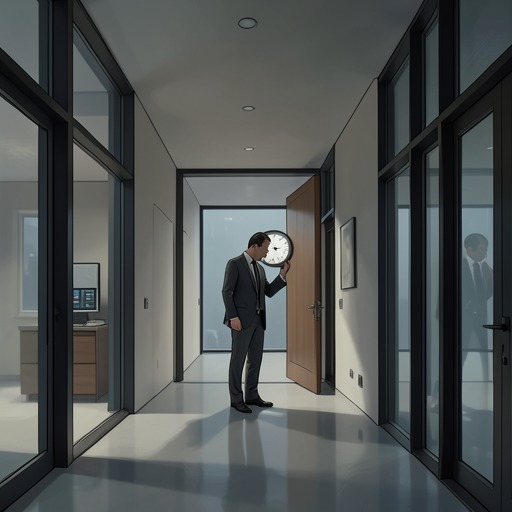
During construction, a site foreman looks at the steel frame and complains that the building resembles a machine more than a house. Von Abt answers that this is precisely the point, invoking Le Corbusier and the French phrase La machine à habiter. The exchange sets two ideas of domestic architecture against each other: the foreman wants stable stone walls, while von Abt rejects stability in favor of a house that will float in light, shimmer, and shine. His design is intended to unsettle the familiar boundary between home and machine, not to make the house feel like a conventional solid refuge.
The novel gives that ideal a material form through the measured construction of the building. As the house grows, steel beams are laid, concrete poured, and space enclosed; meanwhile, the account of its construction is set beside the faster changes of a growing baby. Delays, material problems, and disputes with the workforce interrupt the process. When the shell is finally complete, it initially looks less like a home than a warehouse. Its modernist promise is therefore not delivered as an immediate, finished impression: the structure must be entered and lived in before its spaces can acquire their domestic meaning.
A home remade by power
The machine metaphor darkens when the Landauer House is transformed into a Nazi biometric research centre. Its rooms are reassigned to the work of classification: upstairs spaces become offices, kitchens are converted into a laboratory, and a basement room is prepared for an X-ray machine. The Glass Room is divided by curtains; beside the onyx wall stand scales, a height-measuring device, and a chair fitted with steel rulers. The dining area becomes a photographic studio, with drapes and lights arranged around the Macassar panelling. Even the Bösendorfer piano remains, incongruously, while the other fittings turn the modern house into an apparatus for inspecting and recording bodies.
The transformation extends beyond the rooms and their instruments. Machines from Deutsche Hollerith Maschinen Gesellschaft mbH are unloaded into the garage that once held the Landauer family’s cars; soldiers bring in boxes of collected files. The house’s efficient modern spaces and equipment are put to a purpose opposed to the family life for which they were built. The change makes the phrase newly unsettling: a house conceived as a machine for living becomes part of a bureaucratic machinery that measures, photographs, and documents people.
The Glass Room as lived space
In a later period, Tomáš calls the children’s physiotherapy gymnasium the Glass Room. The name carries a linguistic ambiguity: the Czech word pokoj can mean both a room and peace, quiet, or tranquillity. For Tomáš, the Glass Room is also a glass tranquillity, a space of light and stillness where he can spend time with Zdenka after work. The formal modernist room has not retained one stable function. It is now a state-owned treatment space, but the two also make it a place of private intimacy and dance classes.
The building’s use is governed by practical constraints as much as by architectural ideals. Because of the housing shortage, Tomáš lives with his parents, while Zdenka has a room in the nurses’ hostel, where men are not allowed in the women’s section. With nowhere else they can safely go, they make love on the Glass Room floor despite the possibility of being discovered. The same room also hosts Zdenka’s irregular dance classes, which earn her extra money; the arrangement is tolerated because some of the dancers are children of party officials. The Glass Room thus becomes not merely a designed space or an institutional facility but a place whose uses are negotiated through everyday need, affection, and privilege.
Preservation, appropriation, and memory
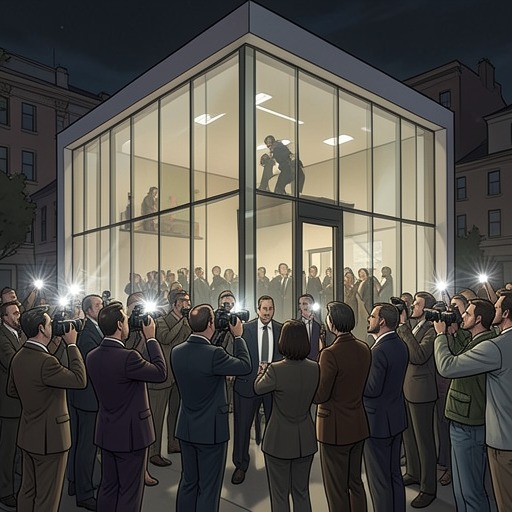
A later newspaper account calls the Landauer House an architectural treasure even as it questions its use as a children’s gymnasium. It describes the Blackfield district overlooking Lužánky Park and the city centre, identifies the house as a masterpiece by Rainer von Abt, and emphasizes the living room’s scale: 230 square metres, with two walls of glass and a view across the city to Špilas. The debate exposes a tension between conserving a modernist work as heritage and keeping it in active use for children’s treatment. Neither description exhausts the building: the house is at once a valued architectural object and a working space shaped by the needs of those who occupy it.
By 1990, the house is described as fixed in time and space like a fossil. Repairs are poor; some original furniture is returned from the Moravian Museum, bathroom fittings are updated and ruined, and the Glass Room’s window panes are replaced with plate glass, restoring its lucid appearance. Visitors arrive in small groups, including trade-union delegations, dignitaries, tourists, and architecture students. Shortly after the fall of the Iron Curtain, Marie Delmas comes from Paris after recognizing the house in a library book photograph captioned La Villa Landauer, élévation sud. The image leads her toward a building preserved and altered across successive eras, where architectural memory is inseparable from the house’s lived and imposed uses.